Loading...

- About
- Exhibit
- Attend
- What's on
- Exhibitor Directory
- Help
- Infos auf Deutsch
- Show more

The eyes of the international community turned to Manchester as the city hosted the IPBES-12 Plenary, the premier intergovernmental authority on the state of the planet’s nature.Marking a major milestone in the city’s sustainability efforts and helping to cement its status as a global leader in climate action, the landmark summit brought together government representatives from around the world to create a new roadmap for nature recovery.This is the first time the UK has been chosen to host the summit, with Manchester given the honour of hosting the Plenary, solidifying the city’s status as a top-tier destination for the world’s most significant policy gatherings.
A Prime Opportunity for Greater Manchester
IPBES is the intergovernmental body charged by the UN to provide the same level of scientific rigour for biodiversity as the IPCC provides for climate change. It provides top-level, scientific assessments of the state of biodiversity and ecosystem services worldwide.The Plenary, held in Manchester, is the annual decision making session where member governments agree work programmes and set global priorities. It provides an internationally significant platform for engagement among scientists, policymakers, business leaders, and civil society. This included putting Manchester’s decision makers, businessesmaking session where member governments agree work programmes and set global priorities. It provides an internationally significant platform for engagement among scientists, policymakers, business leaders, and civil society. This included putting Manchester’s decision makers, businesses and world-leading academics at the heart of world-changing conversations.Hosting IPBES-12 brought hundreds of delegates from around the world together at Manchester Central Convention Complex, creating an opportunity for Greater Manchester to showcase its leadership in sustainability, nature recovery, and green innovation to the world and inspire public engagement across Manchester to accelerate local solutions.
The Business & Biodiversity Report
One of the major outcomes of IPBES-12 in Manchester was the launch of a major new report, ‘The Business and Biodiversity Report’ from IPBES. This report shows that every business depends on biodiversity and that current rates of economic growth have an ecological cost.The report, created by 79 experts across 35 countries, highlights that today’s business models often reward biodiversity ddamaging behaviour. In 2023 alone, $7.3 trillion in public and private finance supported activities that were harmful to nature, compared with just $220 billion for conservation and restoration.It also showed that fewer than 1% of companies currently disclose their impacts on biodiversity, as many often lack the data, tools and incentives required to act.The report offers a pathway for change, creating more clarity within a confusing landscape of reporting standards and measurement frameworks. The report outlines practical tools to help businesses understand and manage both their impacts and dependencies on nature, with examples of how to act.This makes a pivotal moment for businesses and financial institutions across the world, as well as Governments and civil society.
A Packed Programme of Activity
Alongside high-level government talks and the launch of the report, IPBES-12 featured a full programme of events which brought together academics, policymakers, business leaders, and community representatives. These events aimed to explore practical solutions and accelerate naturepositive action at all levels.The events covered topics including developing the next generation of talent, helping businesses support biodiversity recovery, and collaboration between science, business, and policy to support nature.Manchester City Council’s Cyan Lines project took centre stage at Aviva Studios in a session titled “Northern Roots: Opportunities for Nature Restoration across the North.” This session explored how cities and towns across the North of England can create healthier places, resilient communities, and longterm value for both people and nature.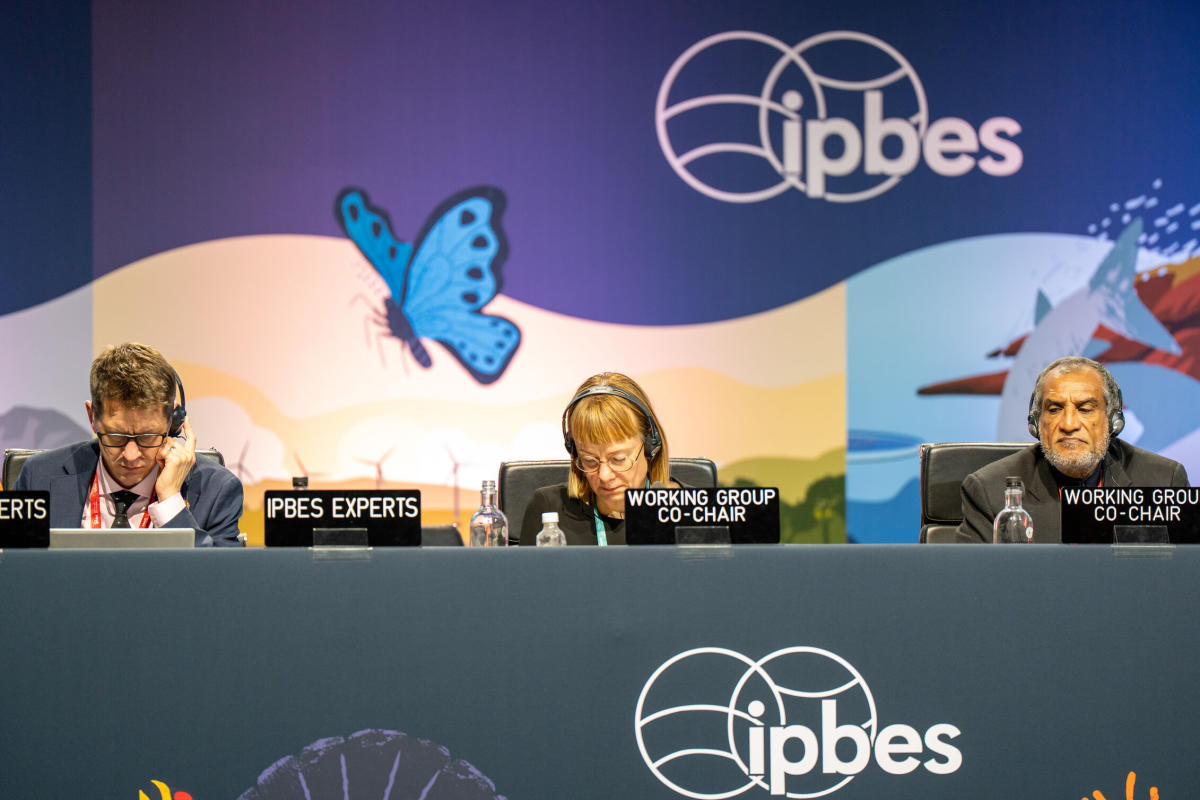 📷Credit: IPBES
Why IPBES-12 Matters
The climate crisis remains one of the greatest challenges our generation faces. With rising temperatures, overpopulation and rapid economic progress, nature is declining at extraordinary rates. Nature underpins our lives, our economy, life as we know it. From the food we eat, the water we drink, the air we breathe – all of it relies on healthy ecosystems so it’s vital that we protect it.We know that there are, practical and achievable pathways for transformative change do exist, so conferences like IPBES help to make them a reality. Experts claim that 2026 is a a critical opportunity to change course, with IPBES marking just one of a series of landmark international events that will help shape the future of nature recovery for decades to come.
What This Means for Manchester
IPBES-12 is more than just a conference. It is a global platform that can influence how countries and industries respond to biodiversity loss over the next decade, helping to address an urgent challenge that could change the future of how we live.By hosting the Plenary, Manchester has reinforced its growing reputation as a leader in sustainability, innovation, and international collaboration.Our region’s universities, research institutions, public sector bodies, and businesses were able to share their expertise and contribute to shaping the legacy of IPBES-12.The overarching message from the conference is clear: nature underpins economic success.The city’s role in hosting the launch of a hugely significant businessandnature report reinforces its status as a place where global challenges meet practical, sciencedriven solutions.For Greater Manchester, this has been a chance to demonstrate how investment in nature can underpin economic success. Our region has been placed at the forefront of international dialogue as a driver for change, inspiring our academics and businesses to take positive action and support climate goals.
Caroline Simpson, Chief Executive of Greater Manchester Combined Authority, said:
“Greater Manchester is working to become a leader in climate action, with a goal to become carbon neutral by 2038. Across our region, we are taking significant steps to support nature recovery, investing in communities through initiatives like our Green Spaces Fund, and working with local authorities to ensure the benefits of Biodiversity Net Gain remain within Greater Manchester.“IPBES-12 has put Manchester’s sustainability ambitions in the global spotlight. Being chosen as the host city reinforces our reputation as a force for change and reflects our commitment to a healthy natural environment that underpins our economy, our communities and our quality of life. We were thrilled to welcome such esteemed experts to our city to drive forward collaboration between policymakers, academics, businesses and communities in true Manchester fashion.”
Victoria Braddock, Managing Director of Marketing Manchester, said:
“Hosting IPBES-12 signifies that our region has the passion, expertise, and drive to make change happen. Manchester is known as a city that brings forward new ideas. Being chosen to host the IPBES-12 Plenary is a vote of confidence in our region as a force for good and is a testament to the work we have been doing across sustainability and nature recovery. It has provided space to put some of our key projects, like Cyan Lines, in the spotlight.“We will continue to work closely with our key stakeholders and businesses to ensure that our region is at the forefront of this change and the legacy of IPBES lives on. Supporting biodiversity recovery will ensure our city region and its natural environment can thrive.”


